 Twitter
 Facebook
 Instagram

The December Wallace Town Council meeting opened on a celebratory note Thursday, recognizing a state championship soccer team, honoring an outgoing council member and swearing in the mayor along with two council members, including one newcomer to the board.
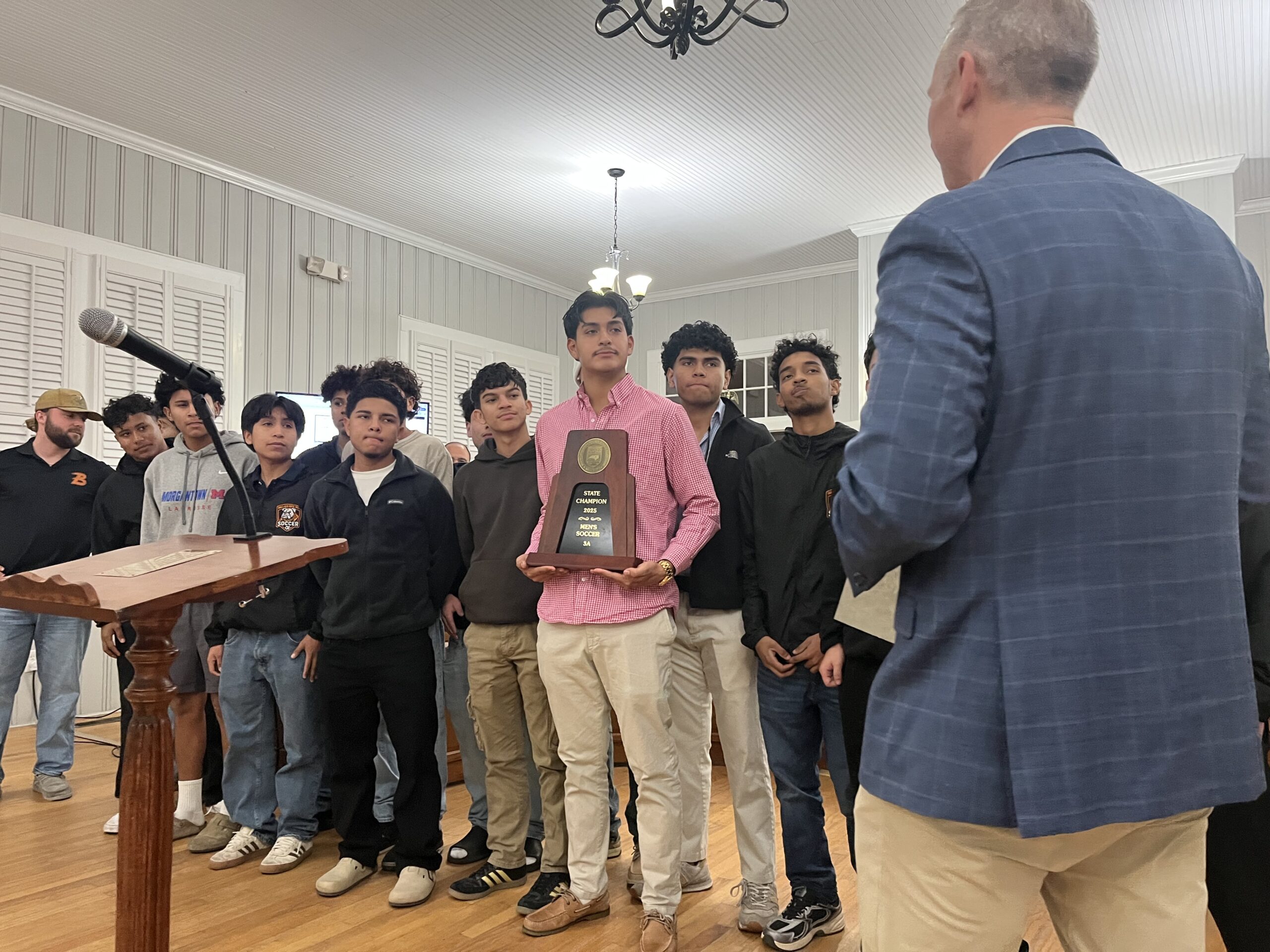
Before the swearing-in ceremonies, Mayor Jason Wells presented the Wallace-Rose Hill High School soccer team with a proclamation honoring the Bulldogs for their championship season. The team captured the state title with a 2-0 victory over Polk County High School in the championship match played in Greensboro on Nov. 22.
Wells then honored outgoing Councilwoman Tasha Herring for her service to the town over the past two years. Herring thanked the mayor and council for their support during her time on the board and said she is not finished with public service.
In the November election, Herring finished third in a race for two council seats. She said she was not upset by the outcome.
“I didn’t lose,” Herring said. “Wallace won. There were three great people running, and they all love Wallace. I am so happy to be a part of this community and this board because they have taken me in with open arms.”
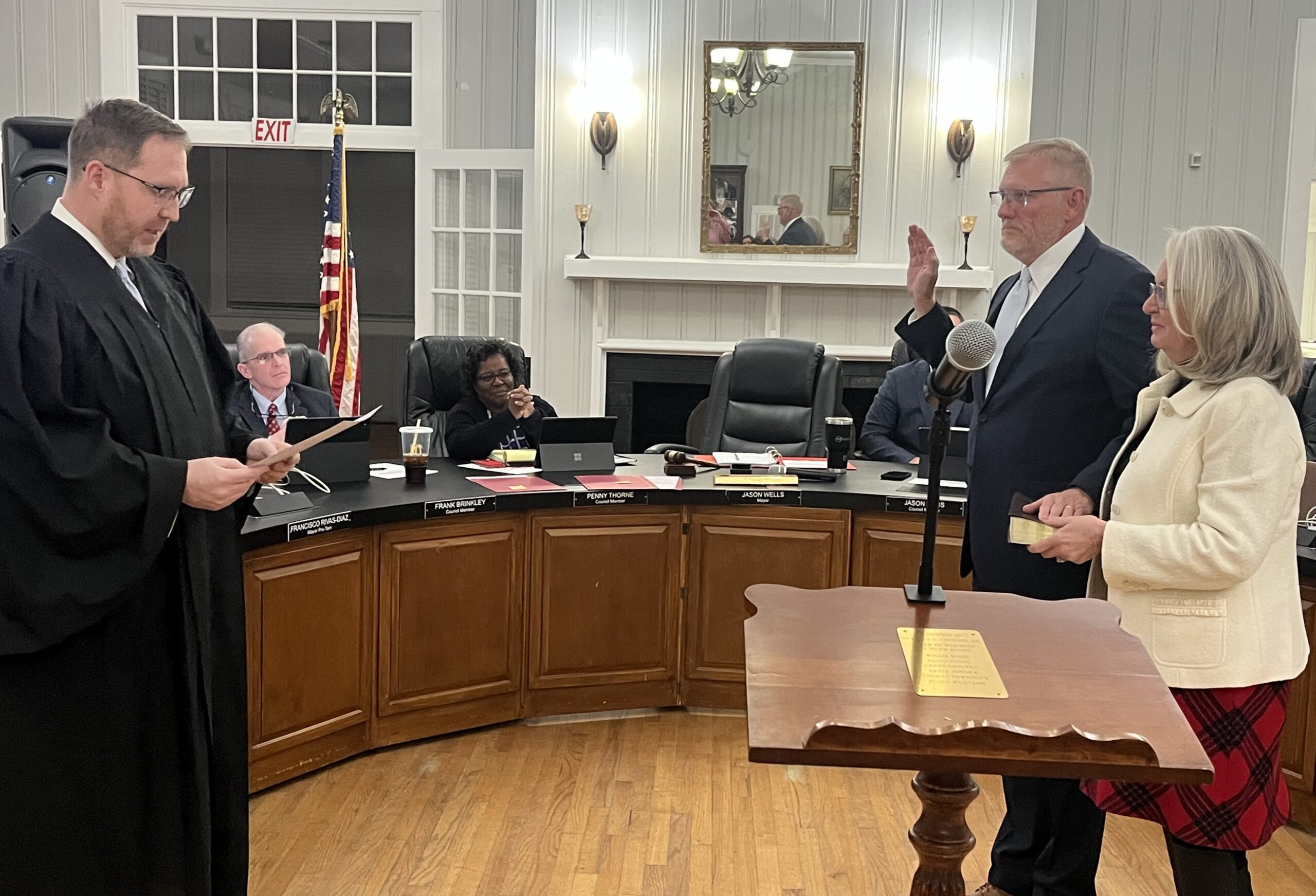
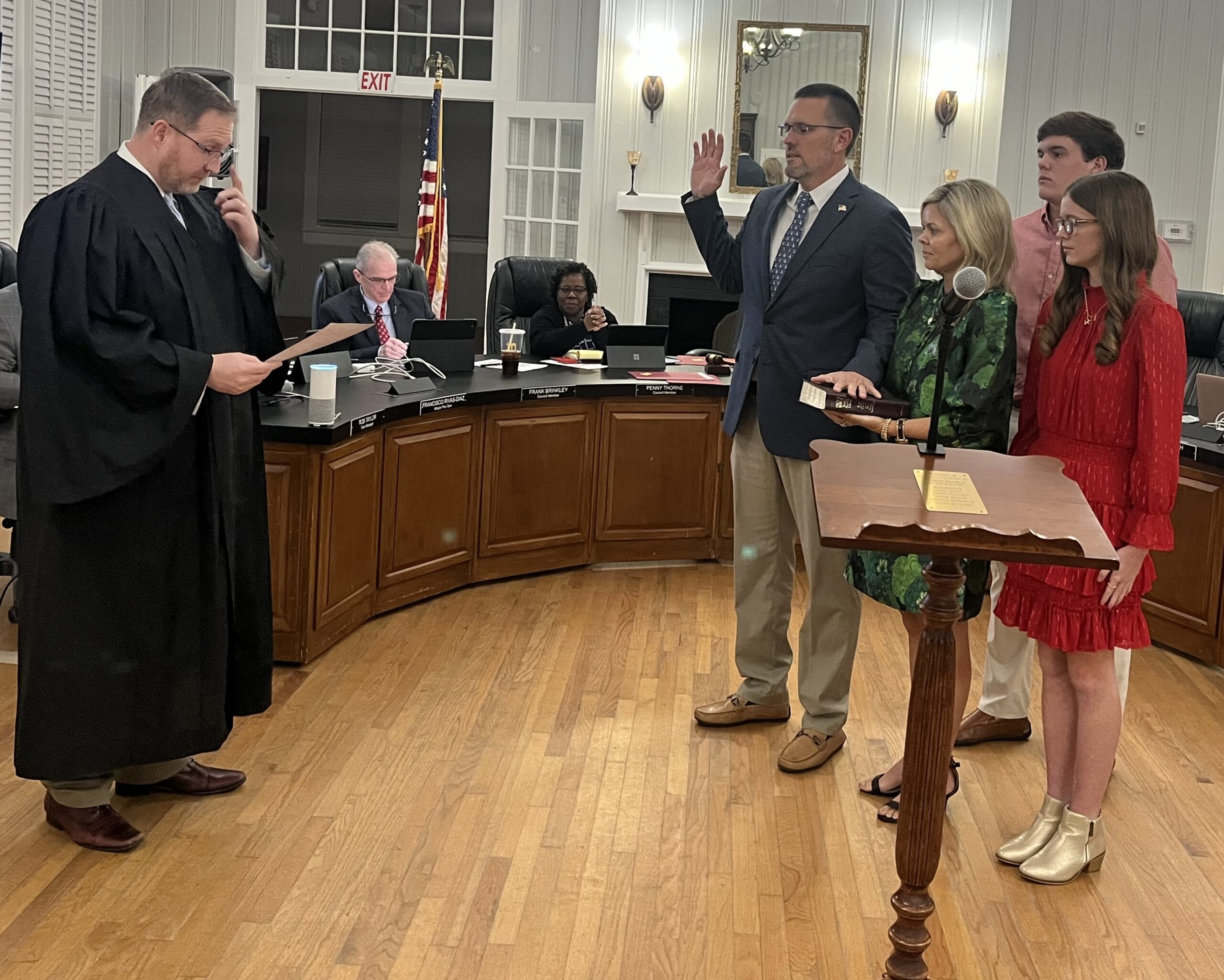
Superior Court Judge Bob Roupe then administered the oaths of office to Wells, returning Councilman Jason Davis and council newcomer Glenn Price before the board moved on to the evening’s agenda.
The first order of business was the selection of a mayor pro tem to serve in the mayor’s absence. Councilman Francisco Rivas-Diaz was unanimously re-elected to the position.
Due to staff turnover and the implementation of new accounting software within the town Finance Department over the past year, the Capital Improvement Plan for fiscal years 2026-30 was adopted Thursday night. The plan is typically adopted earlier in the year alongside the town budget, Town Manager Rob Taylor explained. The challenges within the Finance Department led to the delay.
The Capital Improvement Plan is not an exact budget, Taylor said, but rather a document outlining the town’s funding priorities over the next five years. Any expenditure exceeding $25,000 is included, providing a snapshot of where town leaders expect to focus spending through 2030.
The plan is divided into seven categories: administration; parks and recreation and cultural resources; public safety; public facilities; public works; water and sewer; and the airport.
Parks and recreation highlights include $800,000 for an inclusive playground at Clement Park; $500,000 in the 2027-28 budget year for a proposed splash pad at Clement Park; and $400,000 over the next three years for soccer fields, picnic shelters and additional parking at Farrior Park. Phase three of Farrior Park includes plans for five baseball fields, two soccer fields and an amphitheater, with costs projected at just over $2 million beginning in budget years starting in 2027 and a projected completion in 2030. Most of the funding is expected to come from grants, the general fund and financed debt.
Public safety investments total $2.1 million over the next five years and include fire equipment such as air packs, a new pumper fire truck, police patrol vehicles and a fire command unit. Approximately $600,000 is expected to come from the general fund, with the remaining $1.5 million financed.
The public safety building currently under construction on Southerland Street is among the town’s largest capital projects, with $6.8 million budgeted over the next two years. Additional projects include $500,000 for Town Hall renovations and $60,000 over the next three years for a downtown mural and wayfinding signage.
Road and sidewalk improvements remain a major focus, with $25,000 allocated annually and $550,000 budgeted over the next five years for pavement management of the town’s 23 miles of streets, along with drainage improvements. The total investment is nearly $3.35 million and is expected to be funded through a combination of debt issuance, grants, stormwater funds and state Powell Bill funds designated for transportation.
Airport improvements represent some of the largest projected costs, though most are expected to be funded through Airport Commission enterprise funds, Pender County contributions and state grants. Planned projects include road and utility relocation, a runway extension, new runway lighting, a terminal, a fueling system and hangar construction. Total airport expenditures are projected at $24.1 million, with grants expected to cover all but $65,000.
The 82-page Capital Improvement Plan can be viewed on the town’s website, Town of Wallace – , under the finance tab. Although the plan was just adopted, Taylor said town staff will begin work on a new plan in the coming months as they start developing next year’s budget.
In other financial business, the town received an audit last month for fiscal year 2023-24 that identified deficiencies largely related to challenges within the Finance Department. Delays in completing the audit raised concerns among auditors, requiring the town to file a formal response with the state Local Government Commission.
Taylor said that with a new finance director in place and the accounting software fully implemented, the town’s financial operations are stabilizing.
“The challenges we faced last year with the finance department and several finance directors put us in a hole,” Taylor said. “It’s not perfect, but we’re getting back to where we need to be. We’re on the right track.”
The response to the audit must be signed by the town manager, mayor and each council member before being filed with the state.
In other business, a property known as the Hannah property on N.C. 41 in the Tin City area was voluntarily annexed into the town as part of ongoing economic development efforts.
The council also approved the relocation of power lines to accommodate a runway extension at Wallace Airport. The $475,000 cost will be reimbursed by the state Department of Transportation.
Mills Bryant and Kema Boney were reappointed to the town Alcoholic Beverage Control Board, which oversees the ABC store in the Tin City area. The council also unanimously approved Sammy Marshburn, elected fire chief in September, to continue serving in the position in the coming year.