 Twitter
 Facebook
 Instagram
Even after recent snow, North Carolina remains in drought, extending the fire season from a short February–May period to a year-round risk. On Jan. 1, wildfires broke out in both the eastern and western parts of the state, something that had never happened before.
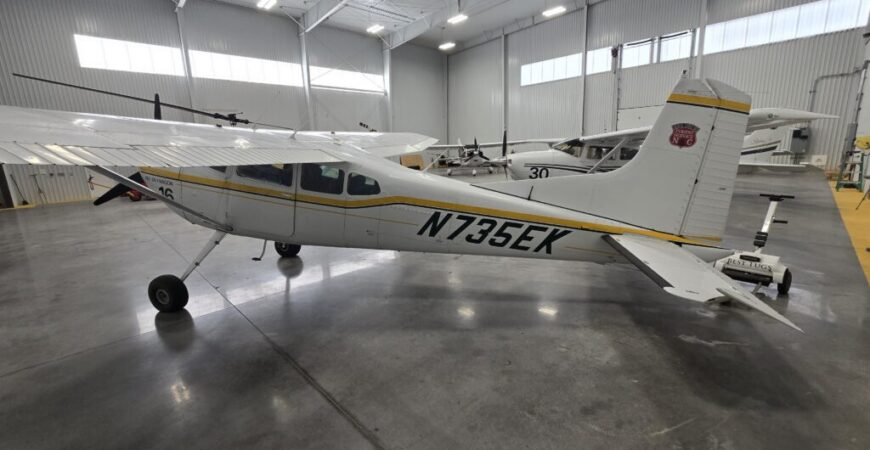
Fighting fires in North Carolina involves a coordinated effort between ground crews and aviation units. The North Carolina Forest Service operates three hubs for its aviation units: Duplin (Kenansville), Central (Sanford) and West (Hickory). Each station has a variety of aircraft, from fixed-wing planes to helicopters and air tankers. The units operate as complete “seat modules,” moving from airport to airport carrying everything they need to load out from that location.
“Most of the time, aviation units operate from a fixed base, and that is their loading airport regardless of where the fire is,” said Interim Director Shannon Coleman of the Duplin hub. “We are the first, and so far the only state to do things this way.”
The hubs work together to fight fires across the state and can load and unload quickly at fire sites.
“We can load 800 gallons of water in approximately three minutes and taxi it off to a fire every five to 10 minutes, sometimes faster,” Coleman said.
When a fire call comes in, aviation units assess the weather and identify the nearest airports with suitable hydrants.
“We have currently marked almost 40 airports in the state that have enough room and a hydrant close enough for us to load from when we get a call for a fire in a particular area,” Coleman said.
Aircraft are most effective during initial attacks.
“We work with the ground crew to get it contained within 24 hours. Anything beyond that becomes an extended attack, and aircraft are not as effective,” said Coleman.
Though they have fought fires in the backyards of subdivisions, aircraft are only used on forest fires, not structure fires, because the weight of the water they carry could cause more damage than good.
Each type of plane has its own specific purpose. The fixed-wing planes are the “eyes in the sky,” performing observation, surveys and mapping. Helicopters conduct prescribed burning and fight fires in multiple ways, including transporting firefighters and dropping water buckets. Air tankers carry concentrated fire suppressant to the loading airports, loading water from any hydrant accessible to the airport.
As a state agency, the Forestry Service works to protect the land, particularly forests. Still, they have helped in other areas in times of need. “During Hurricanes Florence and Matthew, we provided relief efforts in eastern North Carolina, helping farmers who couldn’t reach their livestock. We carried in hay, pumps, and fuel to alleviate floodwater issues,” Coleman said.
The Forestry Service Aviation Unit accomplishes a lot with a relatively small budget compared to other states. The biggest issue it faces is personnel, not equipment. “(This type of work requires) highly specialized pilots who are hard to recruit and retain,” Coleman said.
There are a few perks to working with the Forestry Service Aviation Unit, such as earned compensation time and greater flexibility to be home with families. Still, people leave for higher-paying positions elsewhere, or they retire. The former director of the Duplin hub retired Dec. 1, and Coleman applied for the position.
“They are in the process of screening applicants, and that is a long process,” Coleman said. Meanwhile, she continues as interim director.